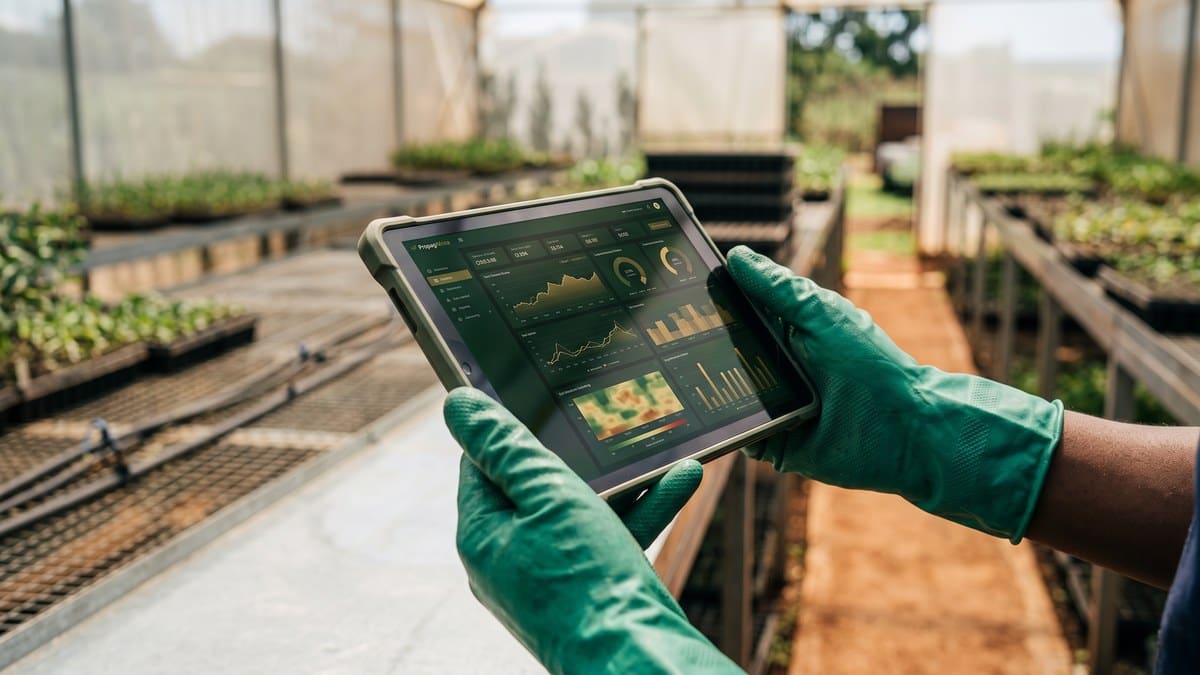
It’s easy to install a full sensor set — temperature, humidity, VPD, soil moisture, EC, PAR — and then not look at most of it. In practice, three checks catch most problems early: whether the zone is holding its temperature and humidity band overnight, not just during the working day when a fault is easiest to notice; whether soil moisture is trending down between irrigation cycles rather than staying flat; and whether an alert has fired since the last check.
Historical reporting is where the real value shows up over a season rather than a single day — comparing this batch’s environment against a previous batch that had a strong take rate tells you more than either reading alone. If a batch underperforms, the dashboard’s history is usually the fastest way to find out whether it was an environment issue or something else.
PropagAfrica’s monitoring package includes the hardware, the dashboard software and support to set alert thresholds correctly for your crop — the goal is a dashboard you check for two minutes a day, not one you have to interpret from scratch each time.